Freshcots
From resume-first hiring to candidates who can show capability, and recruiters who can see it.
- Role
- Product Designer
- Duration
- 4 months
- Team
- Solo Designer
- Platform
- Responsive website accessible on mobile and desktop
- Status
- Beta
- Tools
- Figma, FigJam, Prototyping
Verified outcome
A development-ready hiring platform that reached beta, giving candidates ways to demonstrate potential beyond a resume.
Problem / Opportunity
The problem worth solving
Job portals rely heavily on resumes and conventional career histories, which makes it hard for freshers, career switchers and returners to demonstrate potential — while recruiters spend significant effort filtering similar profiles.
The people most affected
- Freshers
- Interns
- Career switchers
- Returners
- Recruiters
Project snapshot
Scope and responsibility
- Domain
- B2B + B2C / HR Tech
- Product type
- Web / SaaS
- Market
- India
- Primary user
- Candidates, recruiters and hiring managers
- Role
- Product Designer
- Status
- Beta
Project context
What existed before
- Resume-led applications and keyword filtering
- Conventional career history as the main signal
- Manual recruiter screening of large candidate pools
Resume-first evaluation disadvantages anyone whose potential is not visible on paper, and it gives recruiters weak signals to sort by.
What triggered the work
A need for a hiring platform that could surface capability rather than career history in the Indian market.
Users & context
Understanding the users
Users
Candidates, Experts, Recruiters, Employers, Hiring Managers
Age / context
Early-career to experienced hiring professionals
Environment
Candidates apply on the move; recruiters work at a desk
Primary device
Mobile for candidates, desktop / laptop for recruiters
Digital familiarity
Mixed across roles
Domain
HR Tech and online recruitment
Research / Evidence
What informed the direction
I conducted interviews with 39 participants across the hiring ecosystem — 15 candidates, 14 interviewers (6 HR + 8 technical experts), and 10 employers (7 startups + 3 mid-cap companies) — to understand challenges across job discovery, screening, interviewing, and hiring.
User flow
How the product works
Core journey
- 1A candidate discovers a relevant role on mobile.
- 2They build a profile that includes more than a resume.
- 3Video-based screening captures capability directly.
- 4Recruiters evaluate candidates against consistent signals.
- 5Shortlisting and application progress stay visible to both sides.
What was simplified
- Job discovery
- Candidate profiles
- Video-based screening
- Candidate evaluation
- Recruiter shortlisting
- Application progress
Two very different surfaces share one data model: a mobile-first candidate experience and a dense desktop recruiter workspace.
User experience & trust
How the experience should feel
Before
- Candidates feel invisible behind a resume
- Anxiety about gaps and non-linear paths
- Recruiter fatigue from repetitive screening
Experience goals
Application progress is always visible to candidates, and recruiter views present the same structured signals for every profile so comparison feels consistent.
User behaviour
How the design supports user behaviour
- 1Candidate applies and adds capability evidence
- 2Recruiter screens using structured signals rather than resume scanning
- 3Feedback and progress are visible
- 4Candidates invest more in their profile, improving the signal for recruiters
The existing workaround — mass-applying and hoping to be noticed — is what the structured profile is intended to replace.
Opportunity
How might we…
How might we let candidates show capability that a resume cannot carry?
How might we reduce repetitive screening without hiding people from recruiters?
How might we keep candidates informed so applying feels worth the effort?
Prioritisation
Prioritising features for the first release
MVP
- Job discovery
- Candidate profile
- Application progress
- Recruiter shortlisting
Next
- Video-based screening
- Structured evaluation
- Expert module
Later
- Employer analytics
- Recommendation and matching
Design process
From discovery to delivery
- 1Problem framing across candidate and recruiter sides
- 2Research into hiring frictions
- 3Flows for candidate, expert and employer modules
- 4Information architecture across roles
- 5Wireframes and interface design
- 6Prototyping of discovery, screening and evaluation
- 7Developer handoff to beta implementation
Key decisions
The choices that shaped the product
Capability before career history
The profile leads with what a candidate can do, so people with gaps or non-linear paths are not filtered out before they are seen.
Video as structured evidence
Video screening is presented as a consistent, comparable step rather than free-form media, so it helps recruiters instead of adding noise.
Two devices, two layouts
The candidate experience is designed mobile-first while the recruiter workspace is a dense desktop layout — the same data recomposed for very different tasks.
Progress visible to both sides
Application status is shown to candidates to reduce the uncertainty that drives mass applying.
User journeys
Connecting candidates, experts and employers
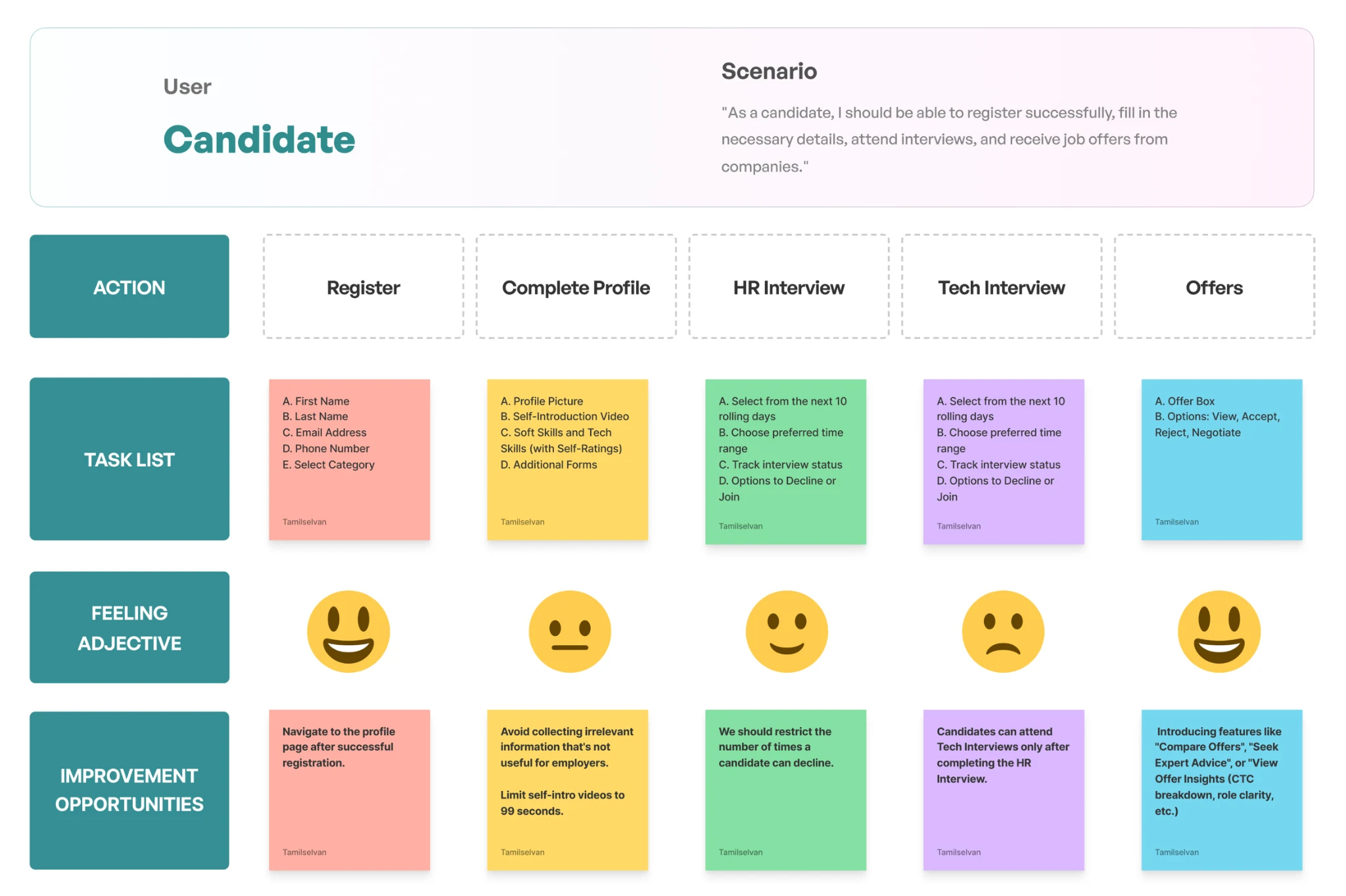
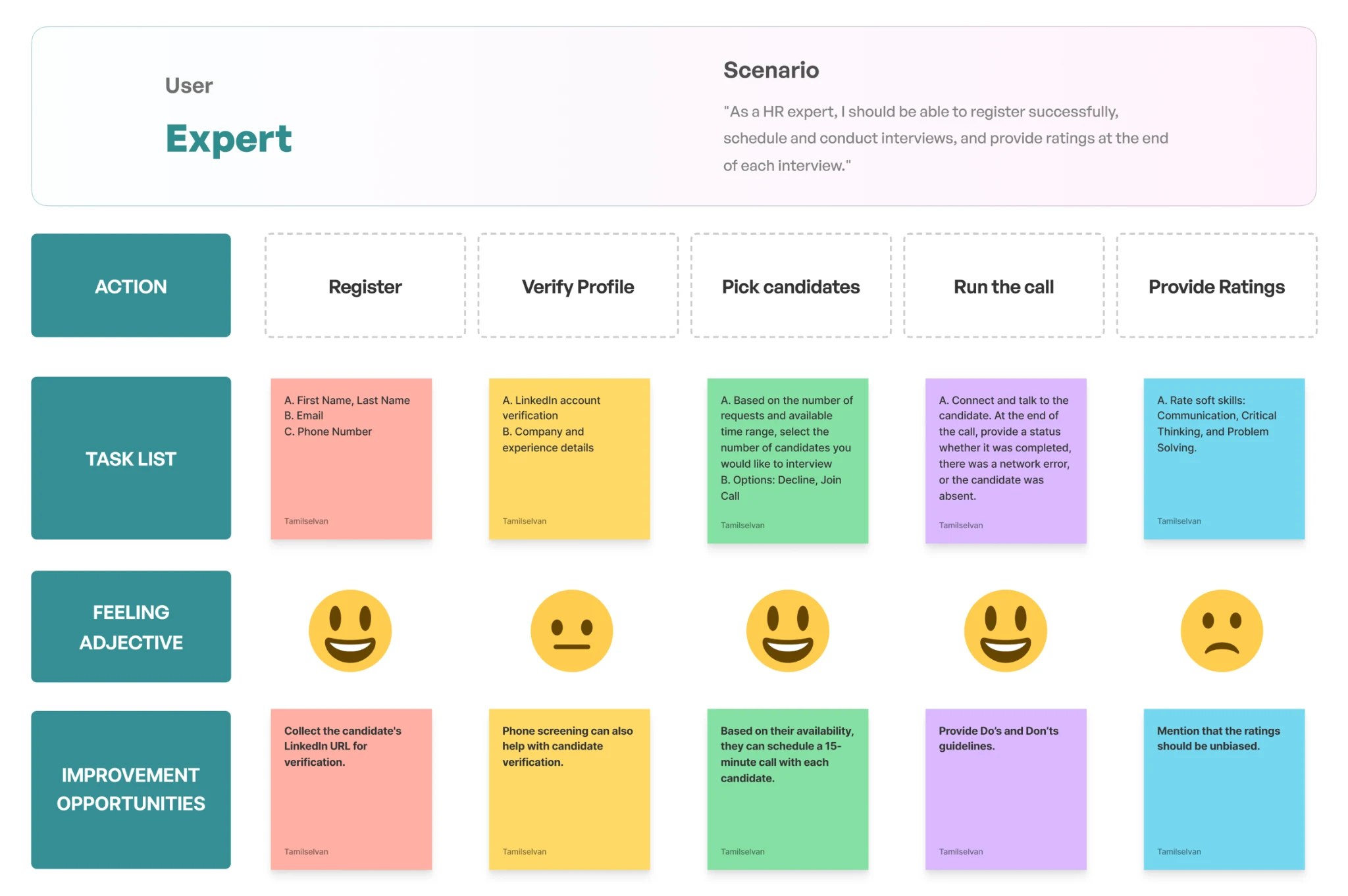
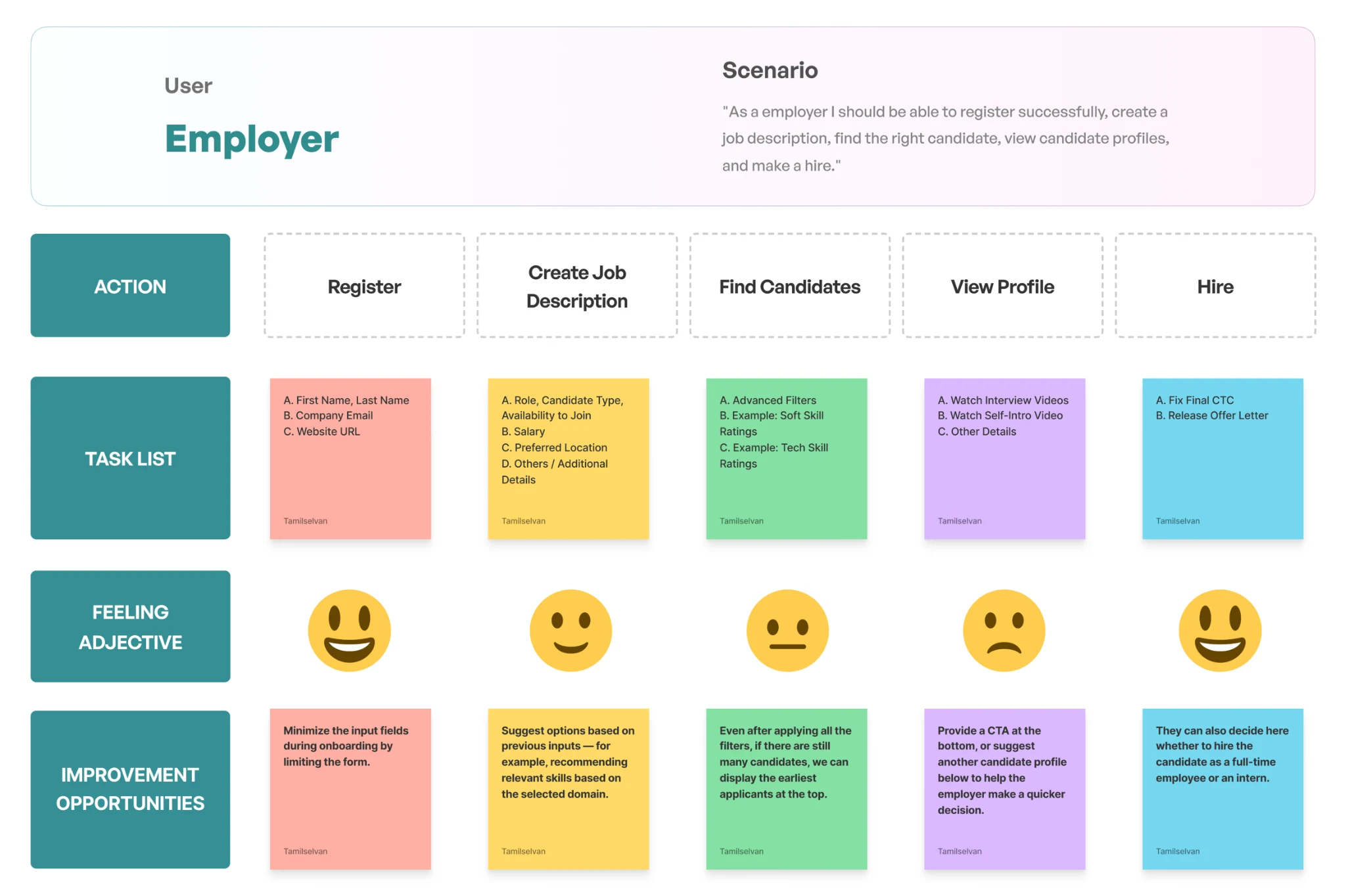
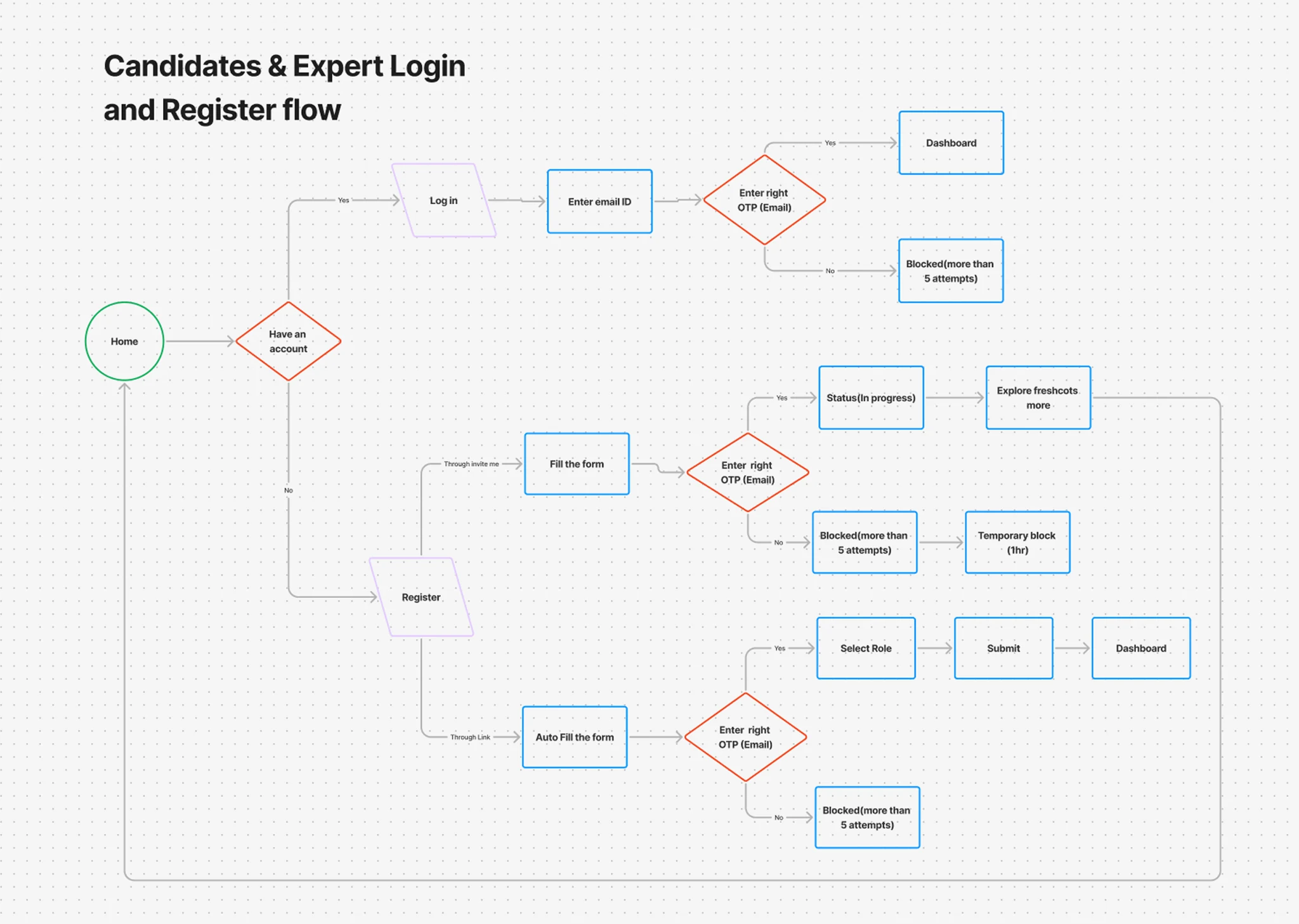
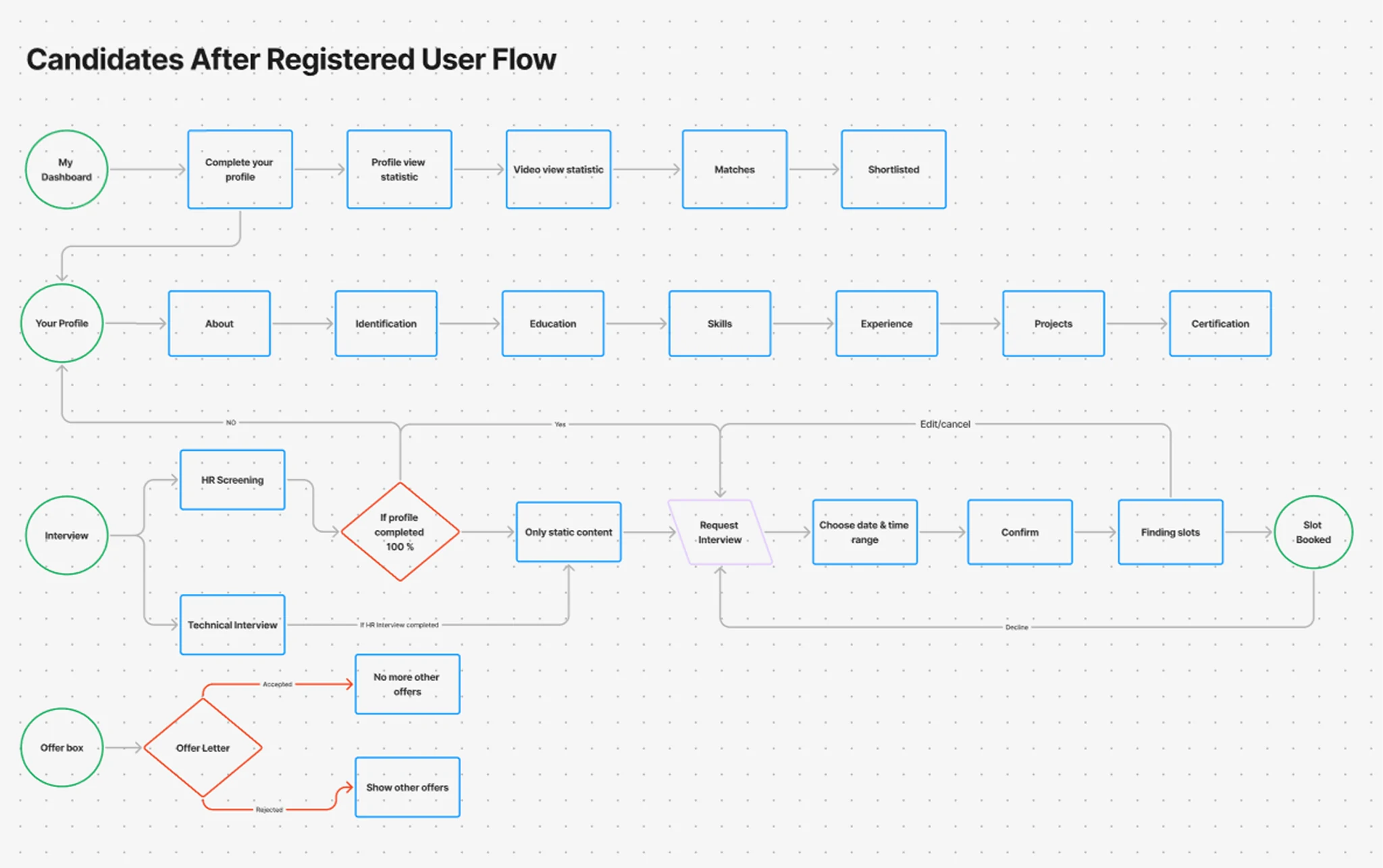
User flow
From registration to opportunity
Final solution
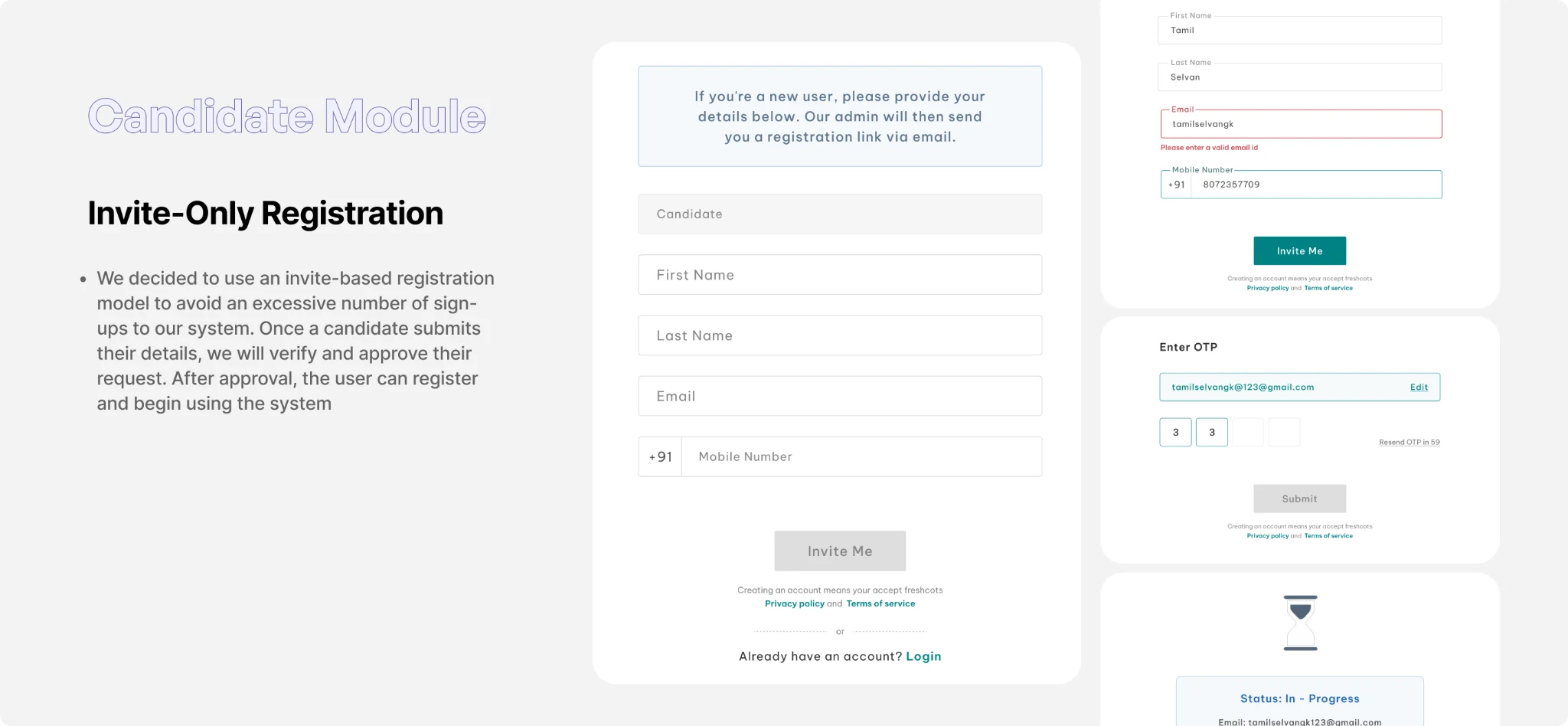
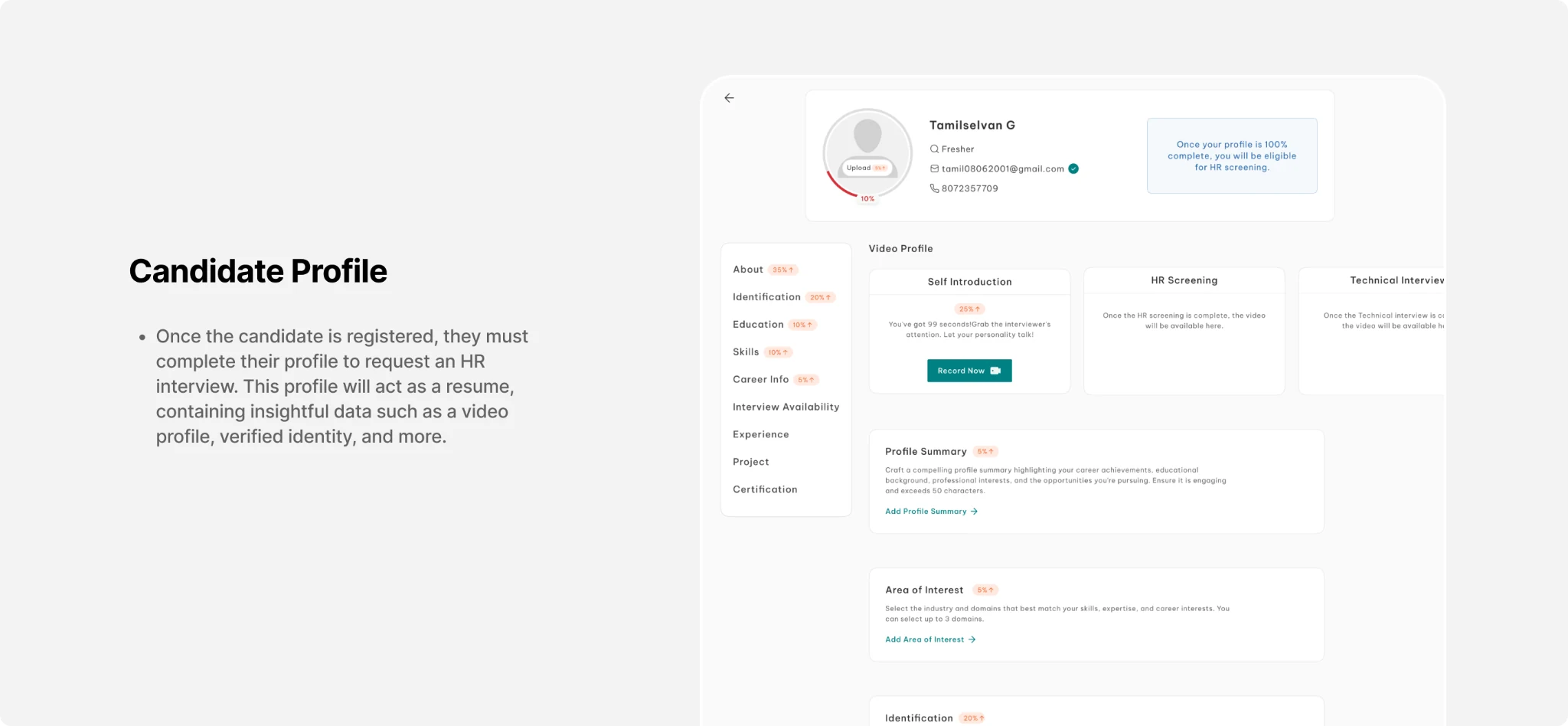
Candidate Module
A development-ready hiring platform that reached beta, giving candidates ways to demonstrate potential beyond a resume.
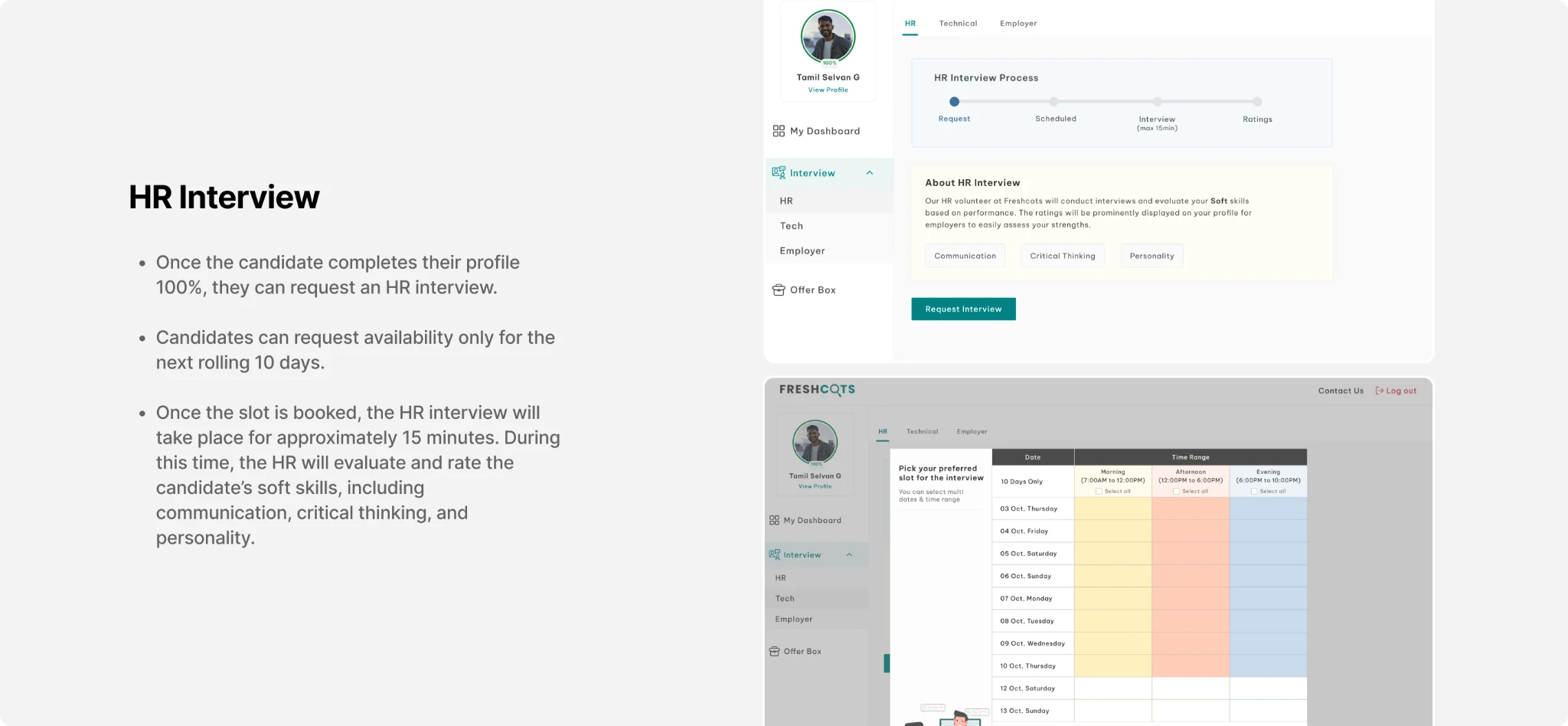
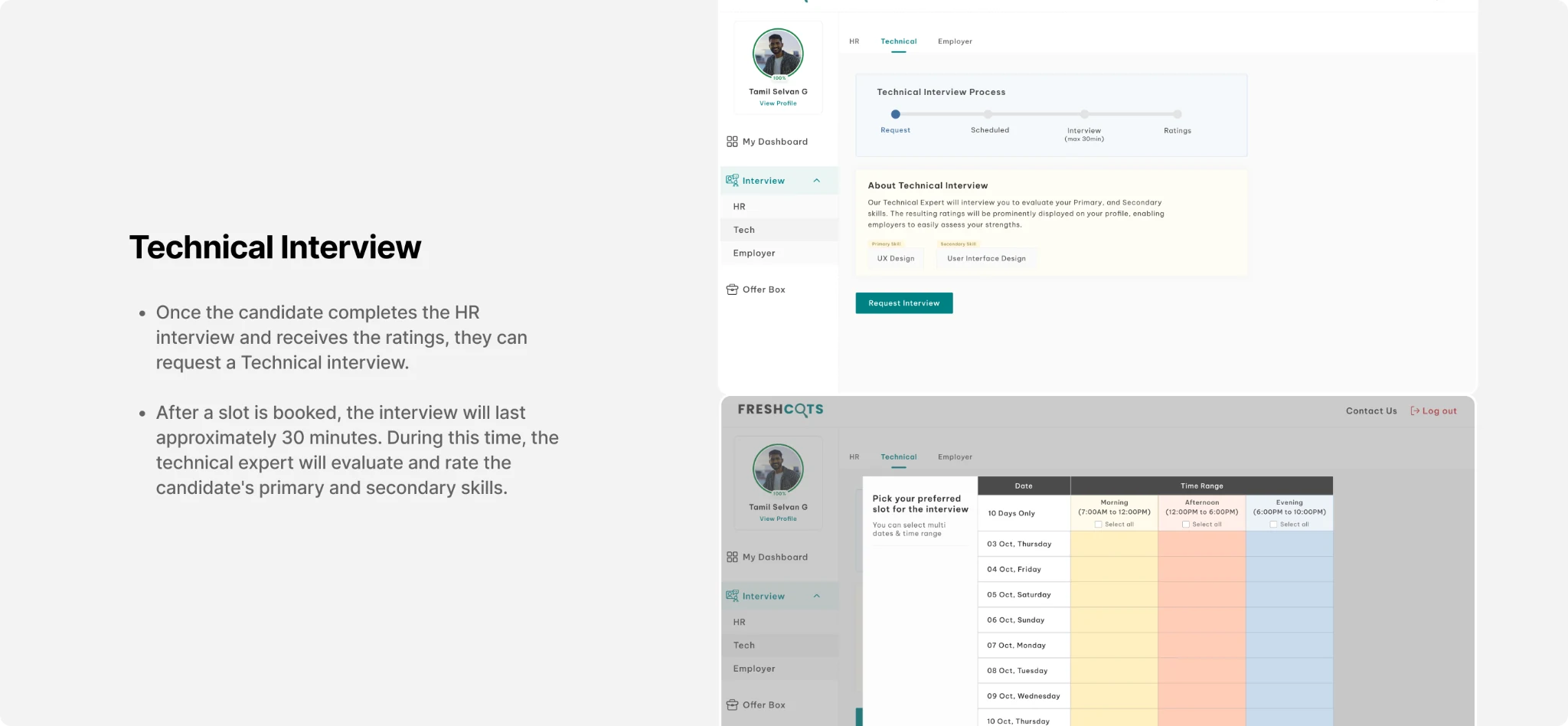
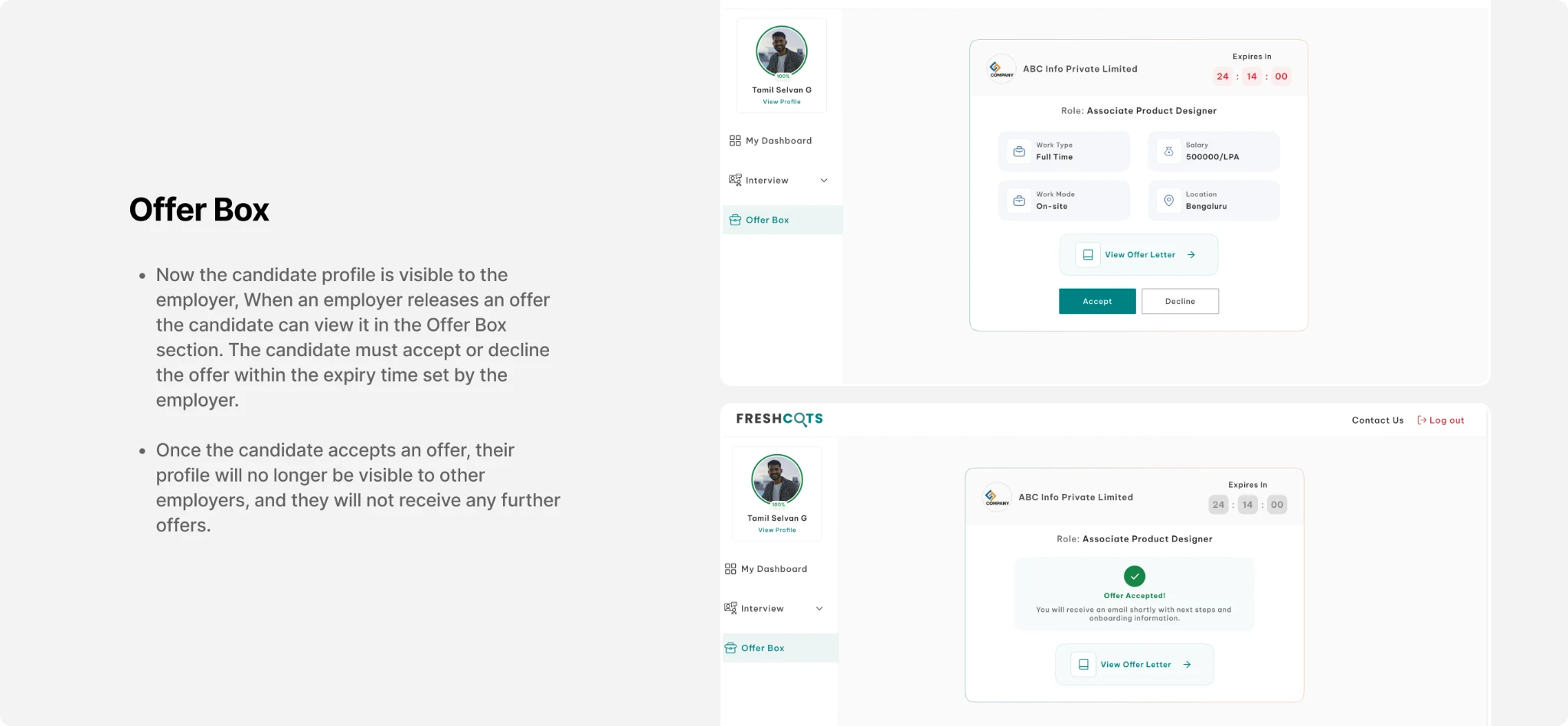
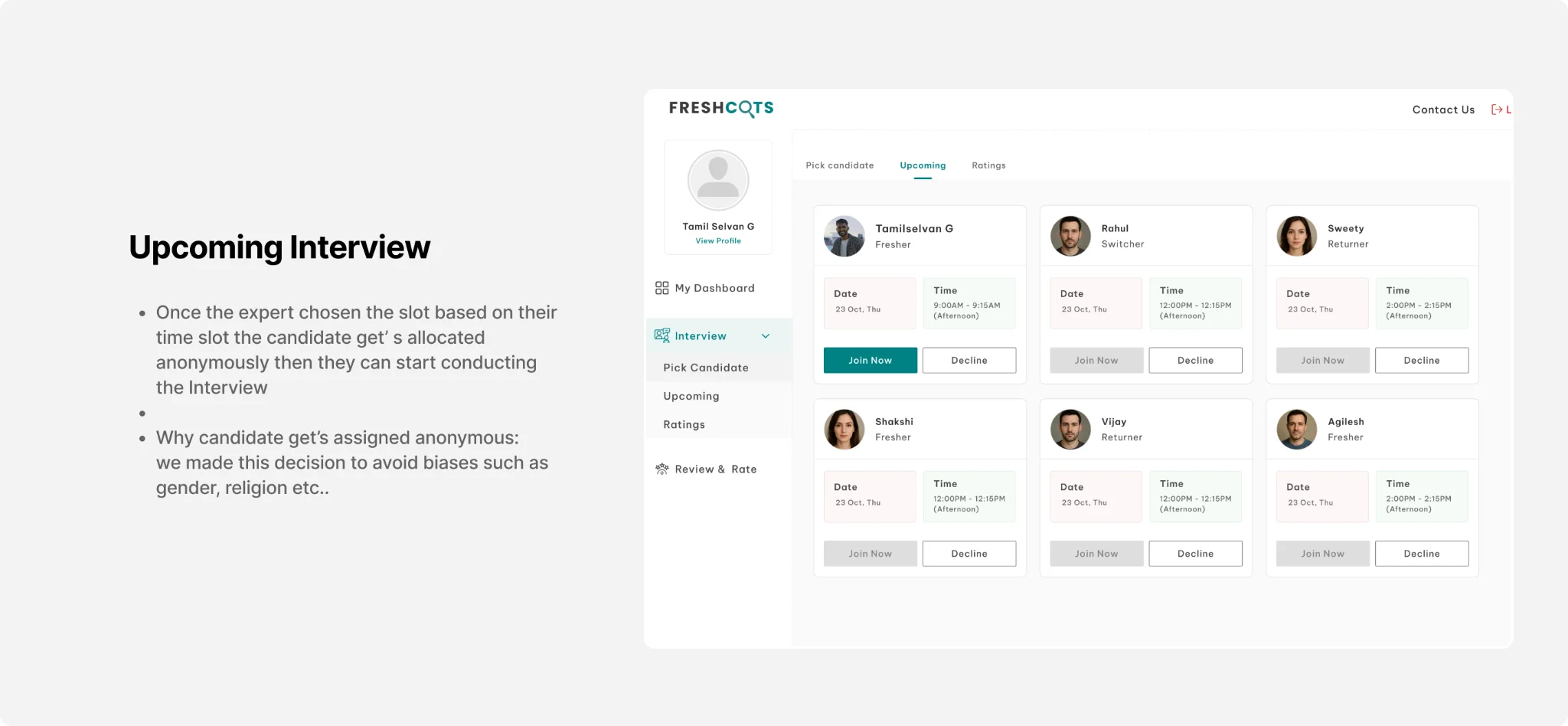
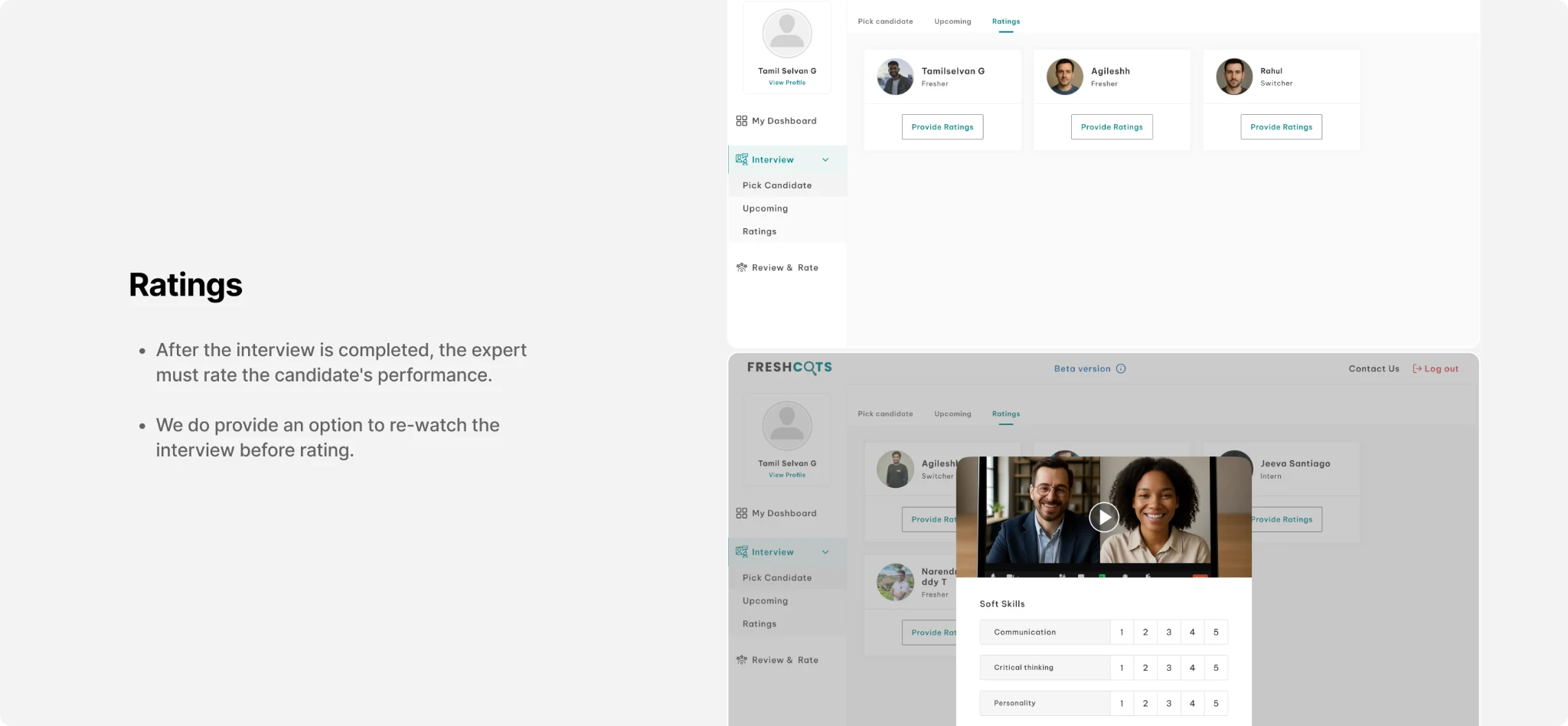
Expert Module
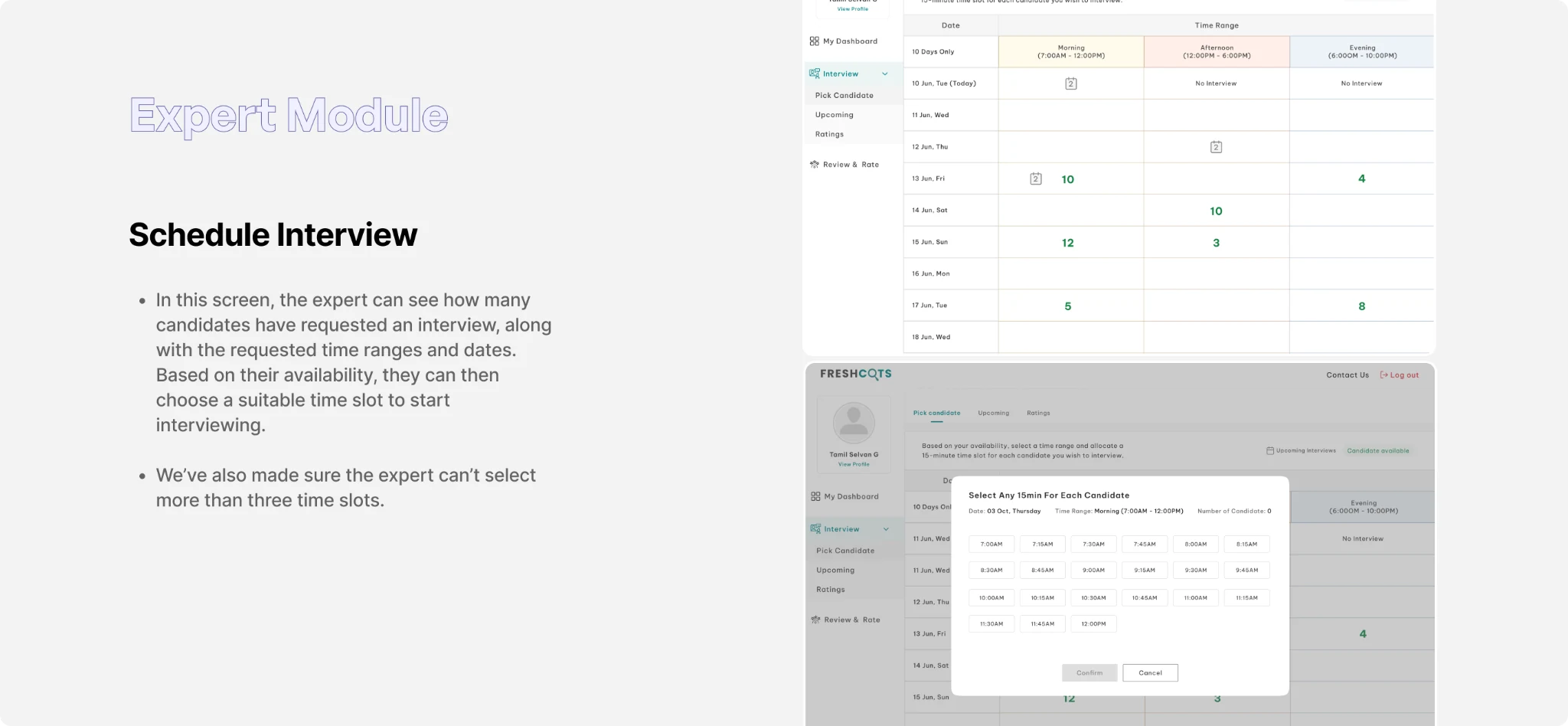
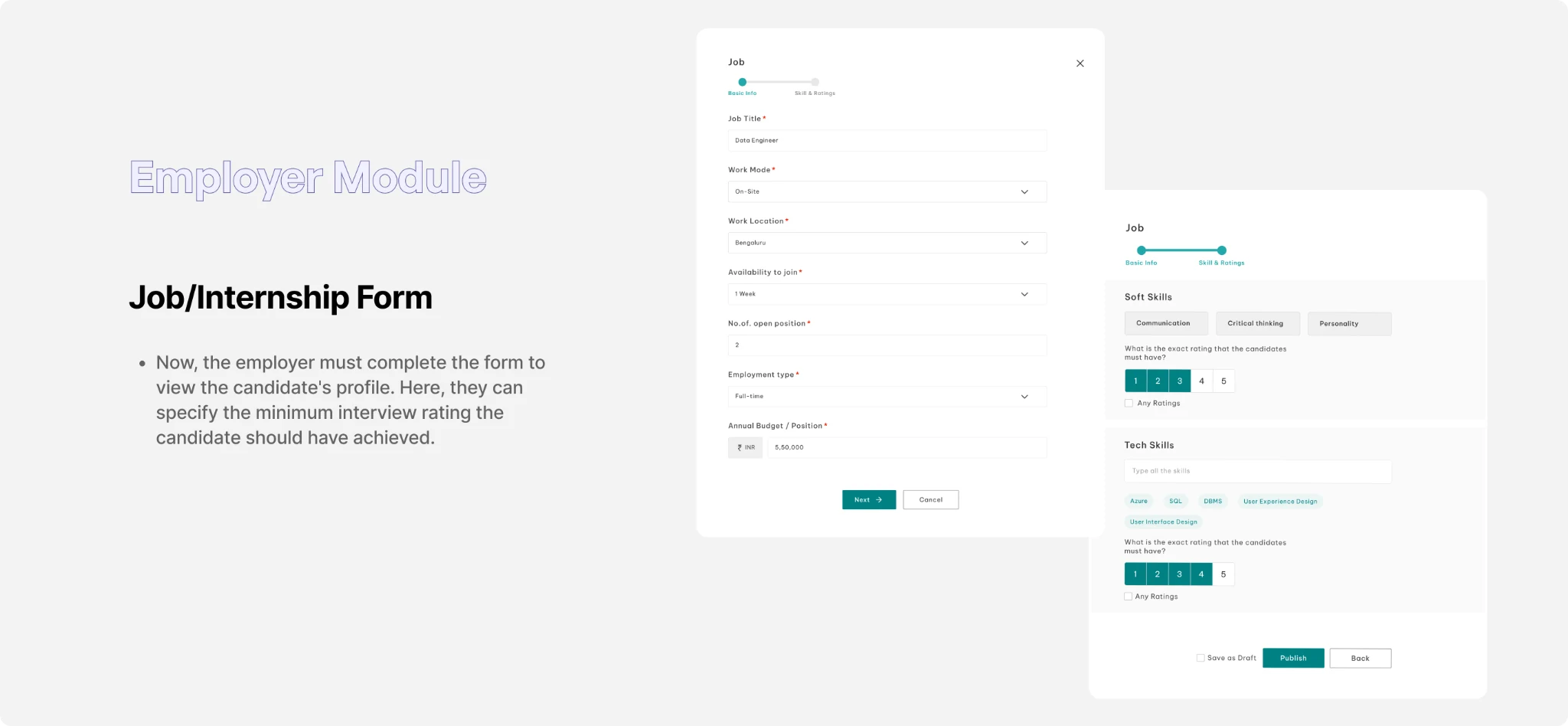
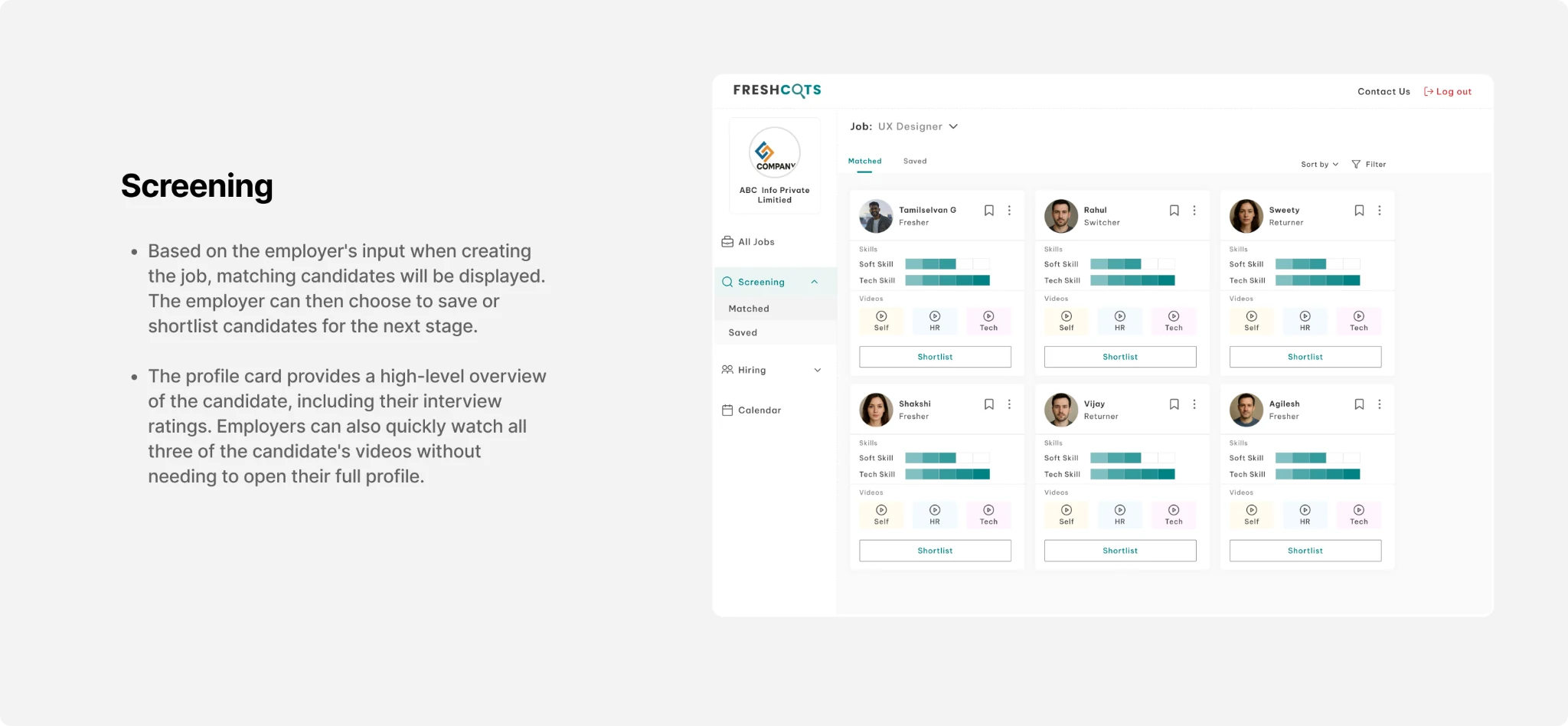
Employer Module
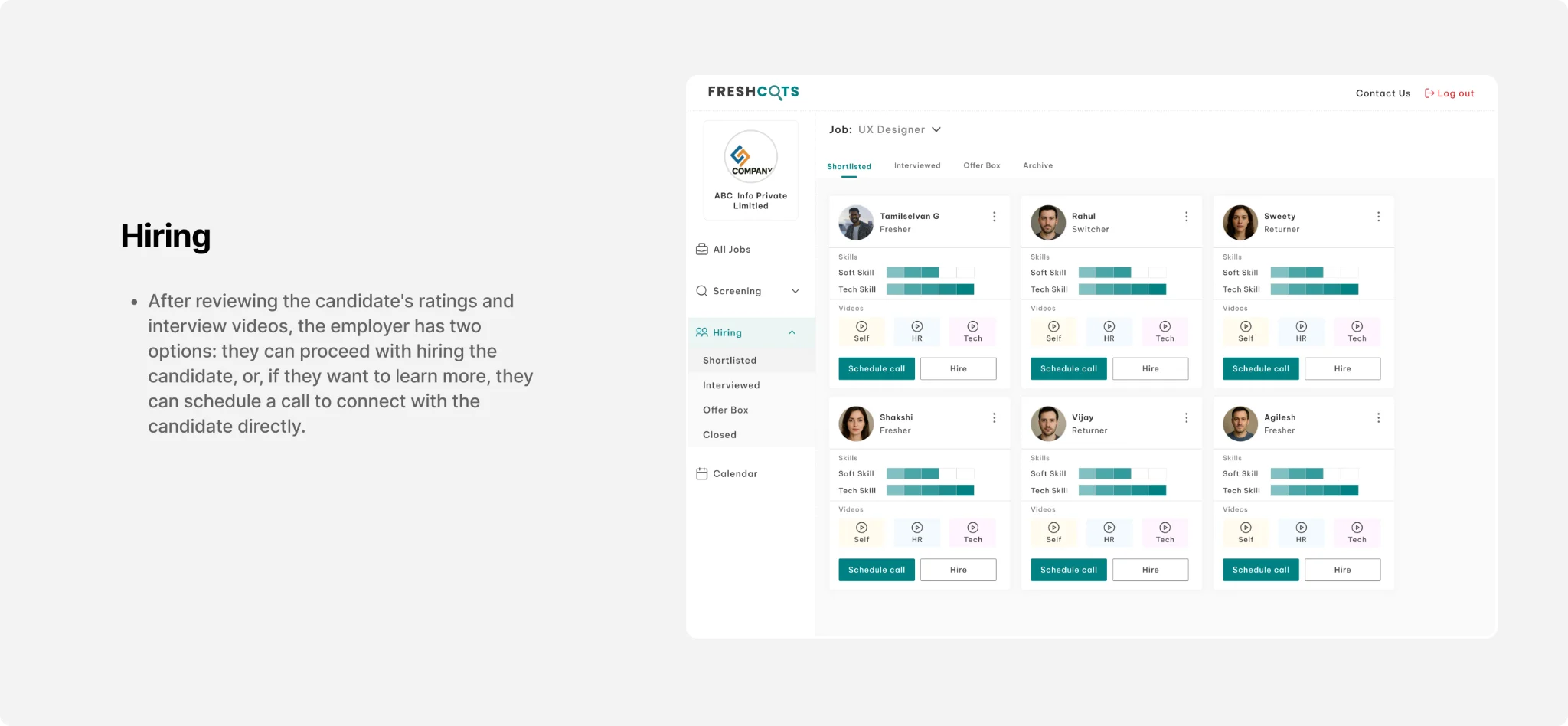
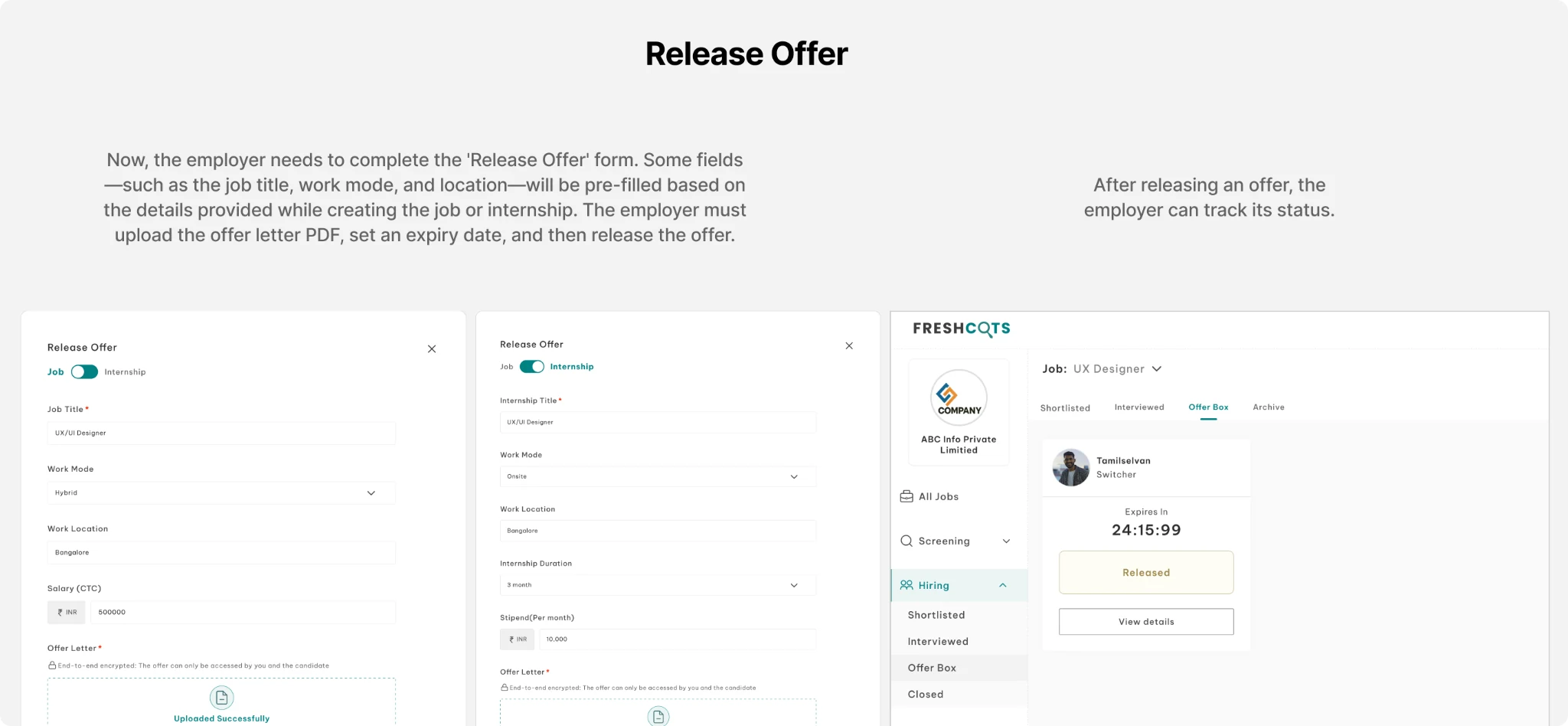
Research & validation
Findings and validation status
- Research participants
- 39 participants across candidates, interviewers and employers.
- Usability participants
- 35+ participants across Candidate, Expert and Employer experiences.
- Usability issues identified
- 29+ issues uncovered across the three core experiences.
- Design iteration
- Key usability findings were addressed in the final design.
- Product outcome
- Development-ready platform that reached beta implementation.
Post-launch metrics to monitor
- Time-to-shortlist
- Application completion
- Interview completion
- Candidate-to-interview conversion
- Time-to-hire
STAR summary
The project in four parts
situation
Traditional job portals often favor conventional career paths and resume-based evaluation, which can disadvantage candidates with limited experience, career transitions or gaps.
task
Design a 0→1 hiring platform that allowed candidates to demonstrate more than a resume while helping recruiters discover and evaluate relevant talent efficiently.
action
Designed the experience across candidate, expert and employer modules, including research, flows, wireframes, interface design, prototyping, candidate discovery, screening and video-based evaluation.
result
Delivered a scalable, development-ready platform that reached beta / live implementation and gave candidates additional ways to demonstrate potential beyond traditional resume information.
Design impact
Before and after the redesign
Before
Resume decides who is seen
Intervention
Capability-led candidate profile
After
Potential is visible beyond career history
Before
Recruiters scan similar profiles
Intervention
Structured, comparable signals
After
Screening focuses on evaluation, not sorting
Before
Applications disappear into a void
Intervention
Visible application progress
After
Candidates know where they stand
Reflection
What I learned
- Designing for two opposed incentives — candidates wanting visibility and recruiters wanting fewer profiles — meant most decisions were trade-offs, not improvements for one side.
- Video only works as evidence when it is structured; unstructured media would have made screening slower, not faster.
Future scope
What I would validate next
- Usability testing with candidates and recruiters in beta.
- Measure screening time and shortlist quality once live data exists.
- Matching that stays explainable to both sides.
Next project
Global Summit Coordination Platform
From spreadsheets, calls and scattered chats to one coordinated view of every meeting.