Humini Biz
From scheduled engagement programmes to small, everyday moments of connection at work.
- Role
- Product Designer
- Duration
- 3 months
- Team
- Solo Designer
- Platform
- Mobile app with admin experience
- Status
- MVP Completed
- Tools
- Figma, FigJam, Interview synthesis
Verified outcome
A 0→1 employee engagement concept built around low-effort interactions, presented at a Singapore business expo where it generated prospective interest and feedback.
Problem / Opportunity
The problem worth solving
Employee engagement depended on scheduled events, surveys and recognition programmes, which created occasional engagement but few meaningful everyday interactions.
The people most affected
- Employees
- HR
- Managers
- Organisational leaders
Project snapshot
Scope and responsibility
- Domain
- B2B SaaS / Employee Engagement
- Product type
- Mobile App / SaaS
- Market
- MNCs and mid-sized organisations
- Primary user
- Employees, with HR and managers as supporting roles
- Role
- Product Designer
- Status
- MVP Completed
Project context
What existed before
- Scheduled events and team activities
- Periodic surveys
- Formal recognition programmes
These initiatives produced occasional engagement, but they did not create frequent, meaningful interaction in the flow of ordinary work.
What triggered the work
An opportunity to explore whether engagement could be continuous and low-effort rather than event-driven.
Users & context
Understanding the users
Users
Employees, HR, Managers, Organisational leaders
Age / context
Typical working-professional range, approximately 22–50
Environment
Office, hybrid and remote
Primary device
Mobile
Digital familiarity
Basic to advanced
Domain
Employee engagement and employee experience SaaS
Research / Evidence
What informed the direction
10+ employees across MNCs and mid-sized organisations were interviewed. This is qualitative research evidence only; it is not a usability-test sample and no quantitative findings were derived from it.
Evidence is reported exactly as available; research interviews are not presented as usability testing.
User flow
How the product works
Core journey
- 1A meaningful moment is created or occurs.
- 2An employee discovers it in a relevant context.
- 3They join a short, clearly bounded interaction.
- 4Recognition or support follows.
- 5Leaving is as easy as joining.
What was simplified
- Moment-based context
- Visible availability
- Short interactions
- Easy join, skip and exit actions
- Reporting and safety controls
Every interaction is designed to be short and optional, so participating never feels like a commitment.
User experience & trust
How the experience should feel
Before
- Pressure to participate in organised activities
- Social hesitation with unfamiliar colleagues
- Worry about interrupting someone mid-work
Experience goals
Availability is explicit, interactions are visibly short, and skip and exit are given the same prominence as join so there is no social cost to declining.
User behaviour
How the design supports user behaviour
- 1A meaningful moment occurs
- 2An employee discovers the moment
- 3The employee participates
- 4Recognition or support occurs
- 5Positive participation makes future participation more likely
The product aims to replace obligation-driven participation with a voluntary loop that gets easier each time it is repeated.
Opportunity
How might we…
How might we make connection feel optional rather than obligatory?
How might we signal availability so no one worries about interrupting?
How might we make a first interaction short enough to feel safe?
Prioritisation
Prioritising features for the first release
MVP
- Create and discover moments
- Availability signalling
- Short interaction flow with join, skip and exit
Next
- Recognition
- Safety and reporting controls
- Admin insights
Later
- Team-level programmes
- Integrations with workplace tools
Design process
From discovery to delivery
- 1Qualitative employee interviews
- 2Synthesis of behavioural insights
- 3How Might We statements
- 4MVP prioritisation
- 5Employee and admin flows
- 6Wireframes and interaction design
- 7High-fidelity prototype
Key decisions
The choices that shaped the product
Moments instead of events
Engagement is anchored to something happening right now, which gives the interaction a reason to exist and a natural end point.
Making availability easy to see
Interviews surfaced fear of interrupting as a recurring blocker, so availability is shown before any interaction is initiated.
Exit is as easy as entry
Join, skip and exit share equal visual weight, which lowers the perceived risk of taking part.
Safety built into the MVP
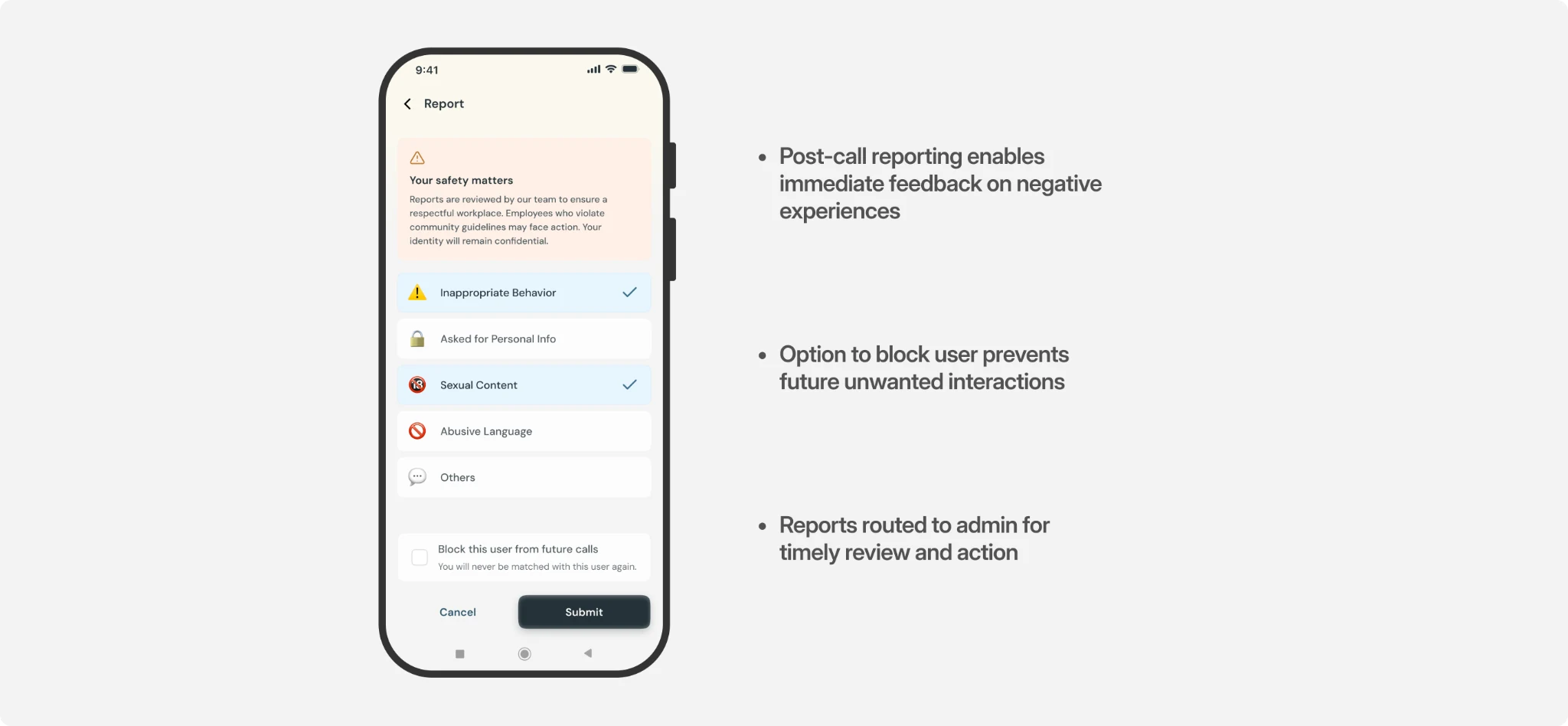
Reporting and controls were scoped into the first version rather than deferred, because psychological safety is a precondition for participation.
User journey
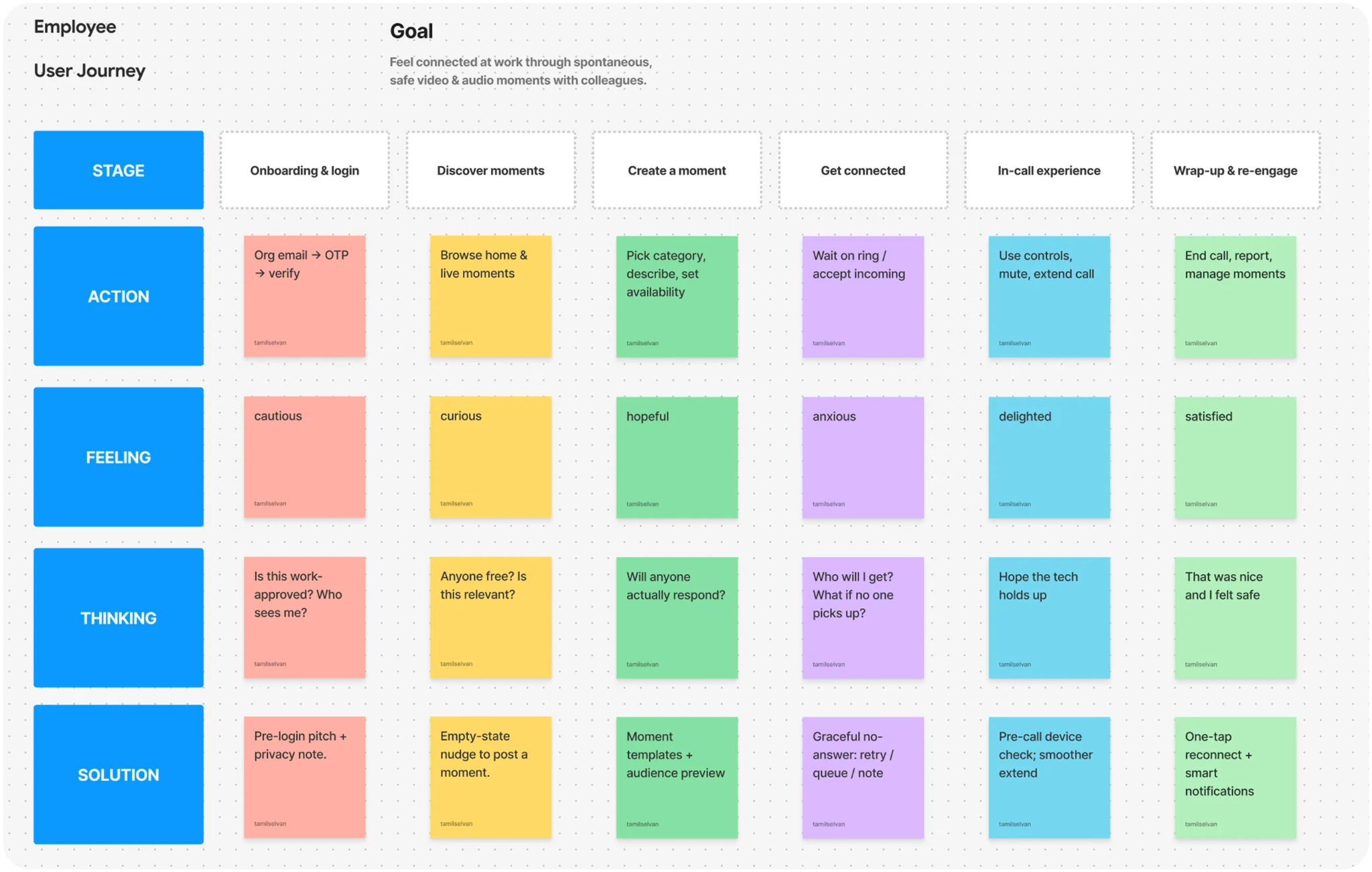
The employee journey
Final solution
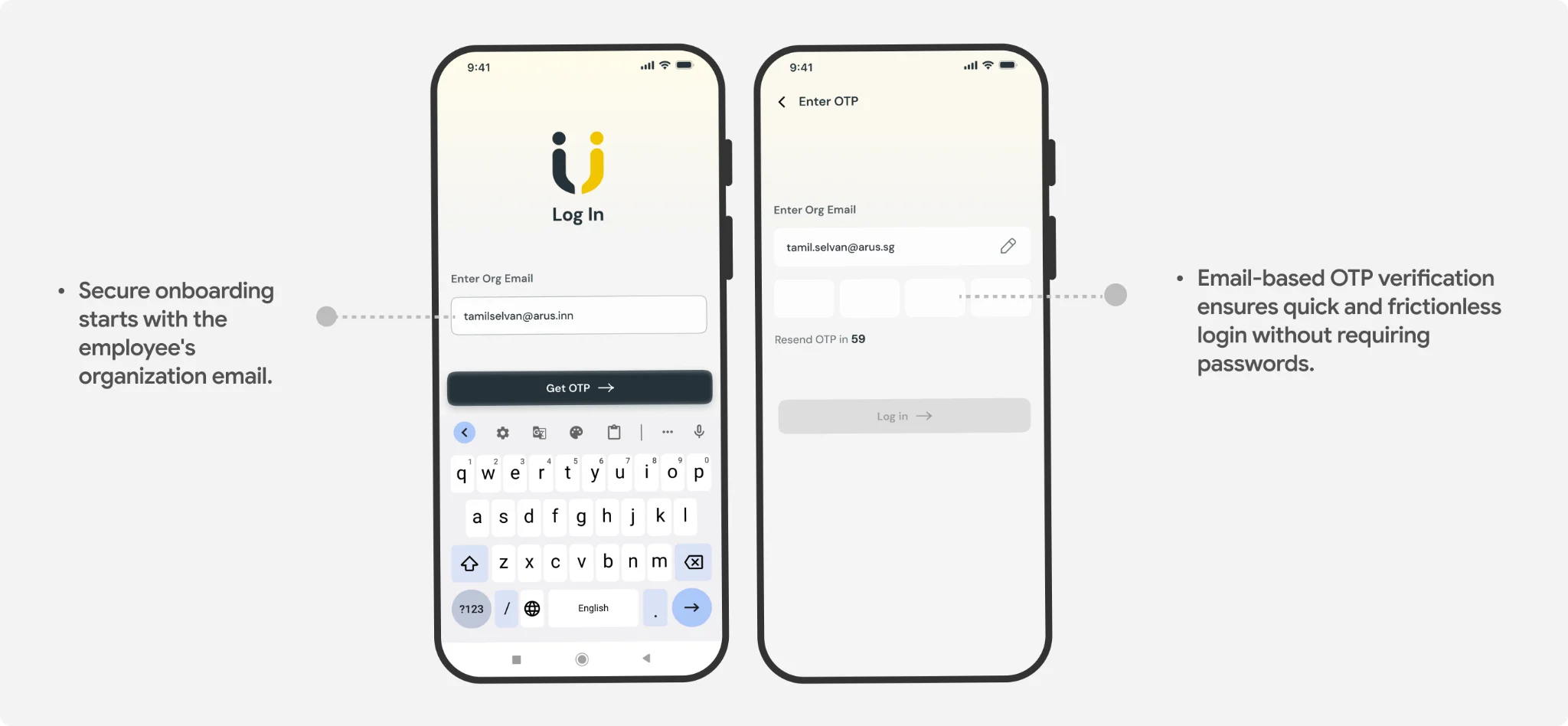
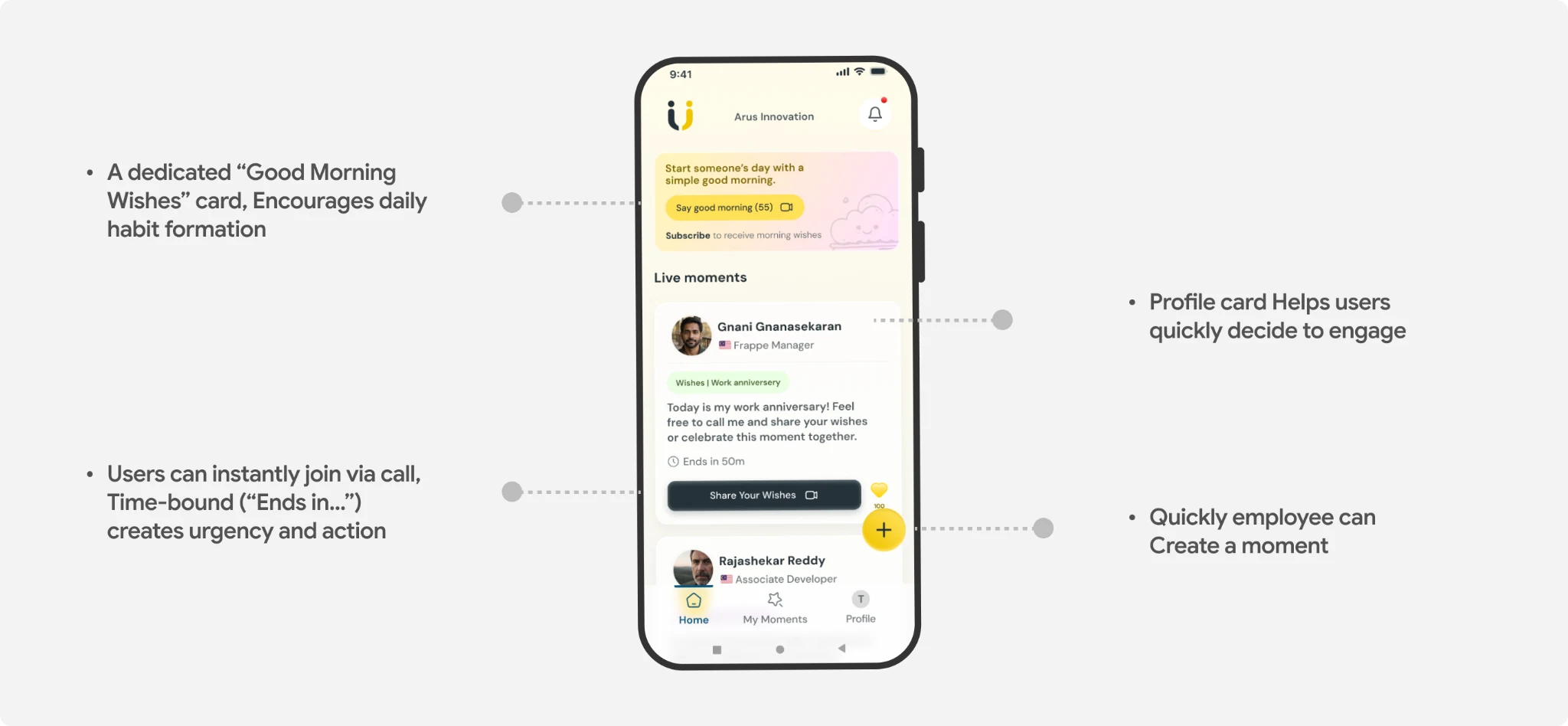
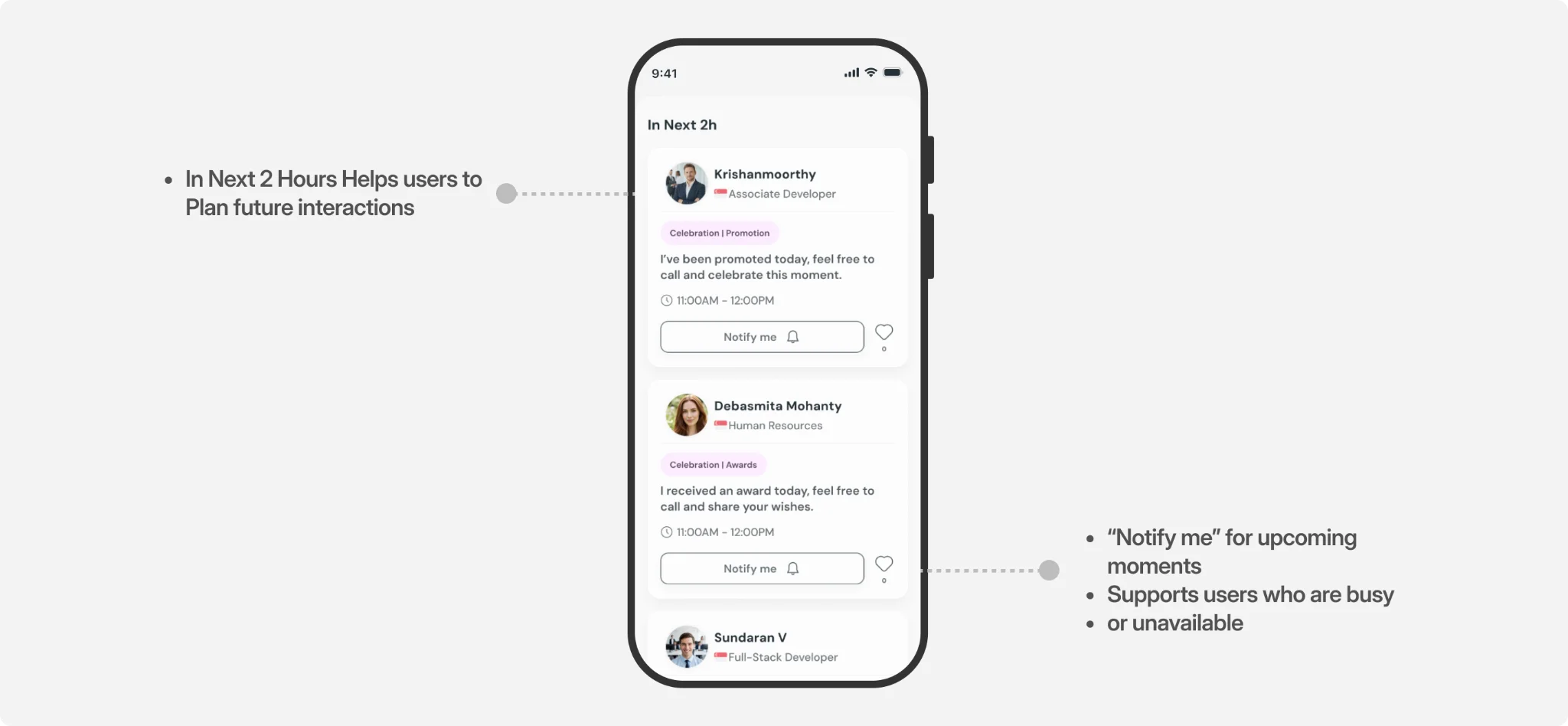
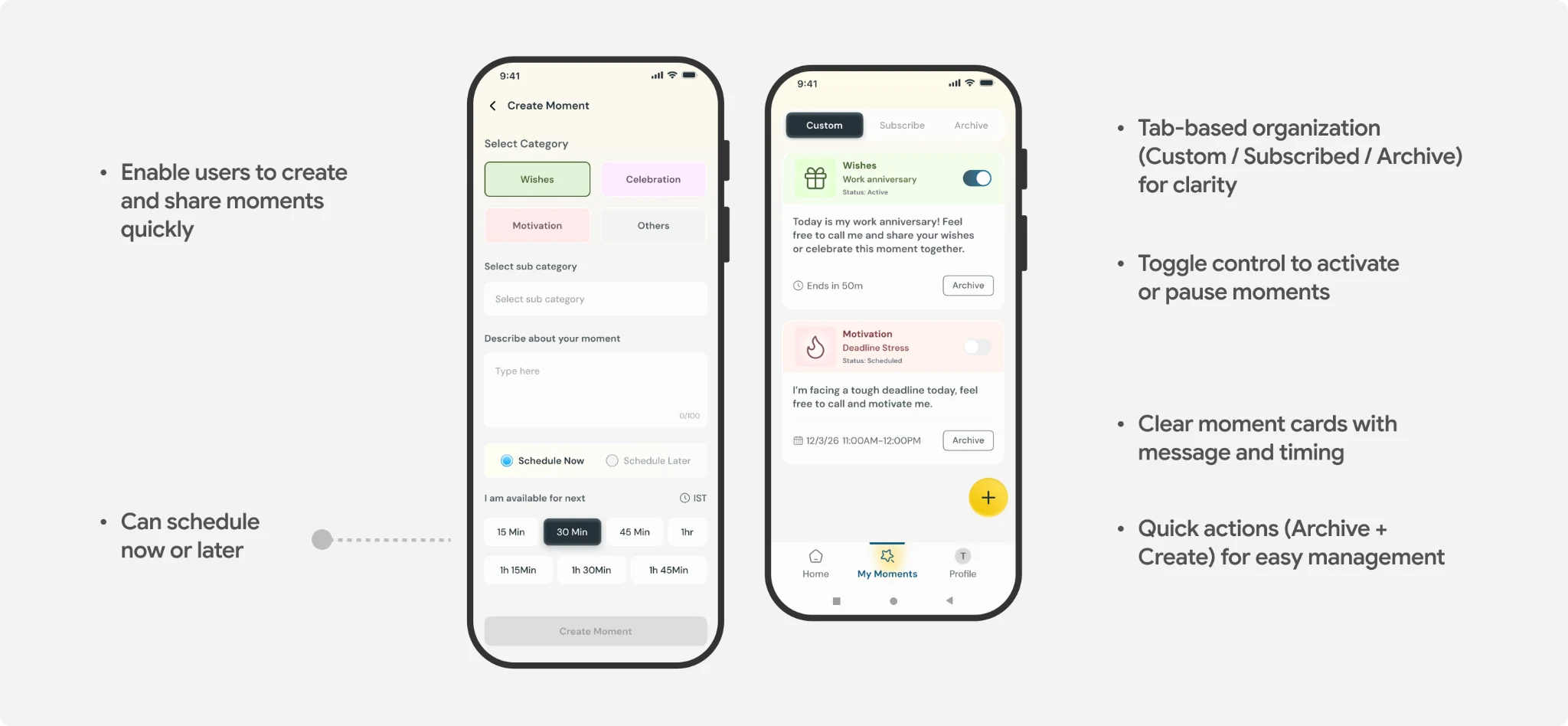
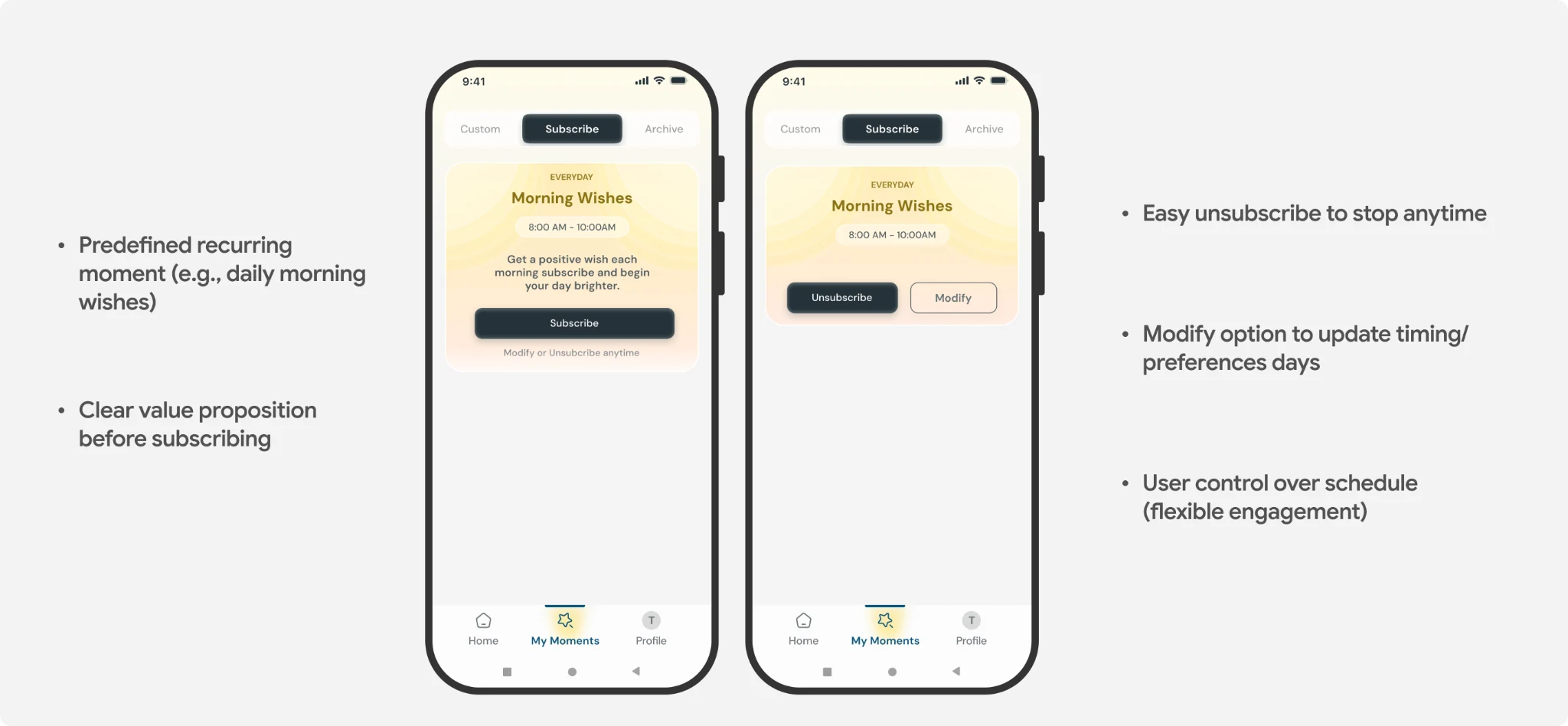
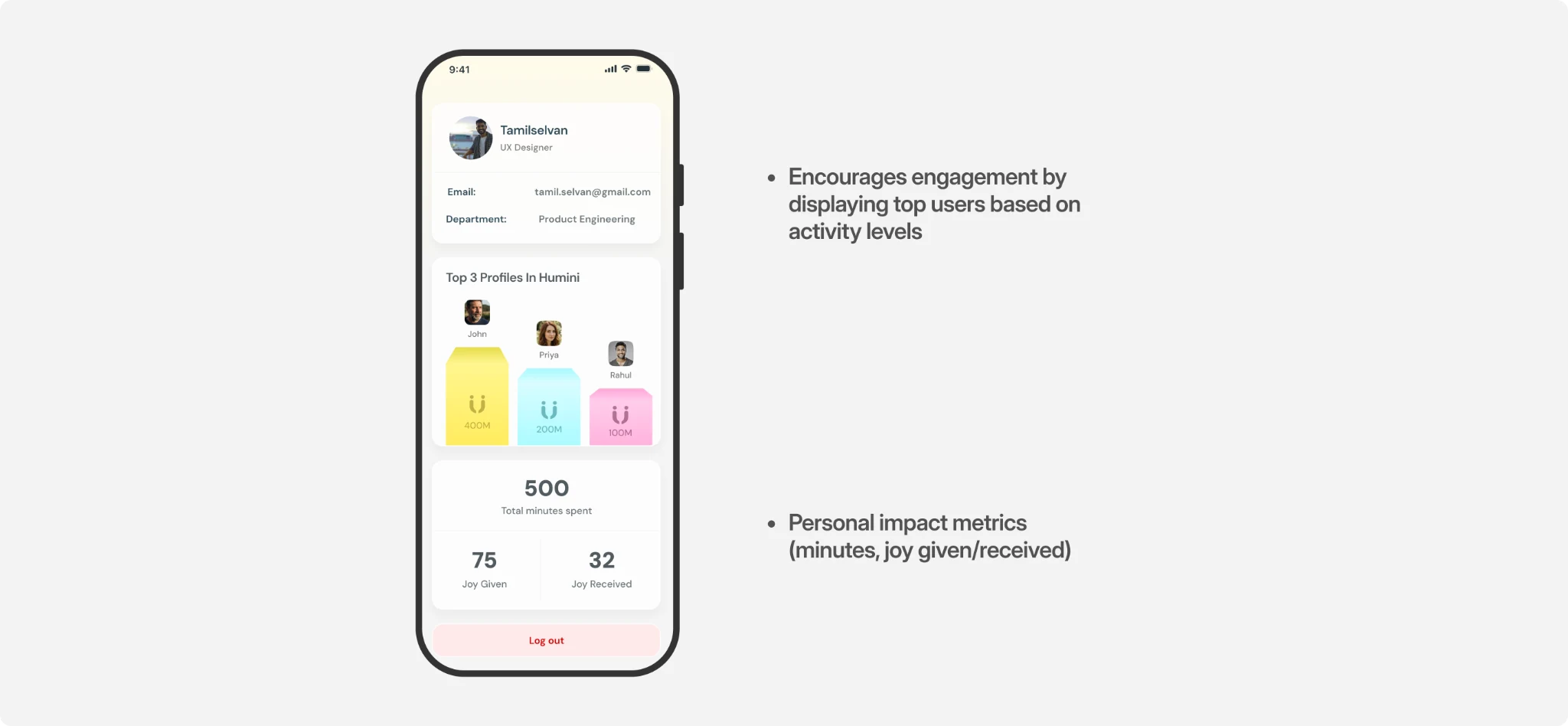
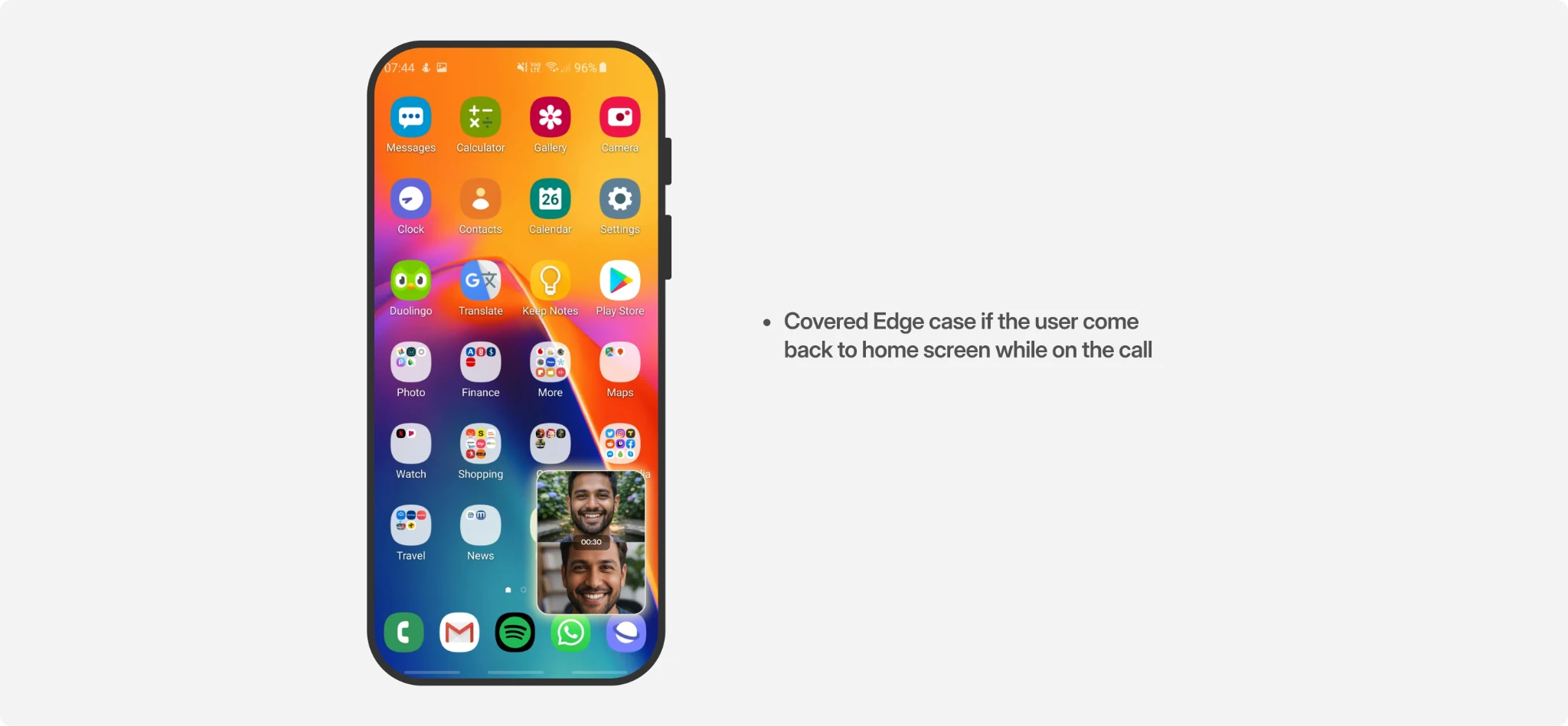
The final design
A 0→1 employee engagement concept built around low-effort interactions, presented at a Singapore business expo where it generated prospective interest and feedback.
Research & validation
Findings and validation status
Research sample
10+ qualitative employee interviews across MNCs and mid-sized organisations.
External feedback
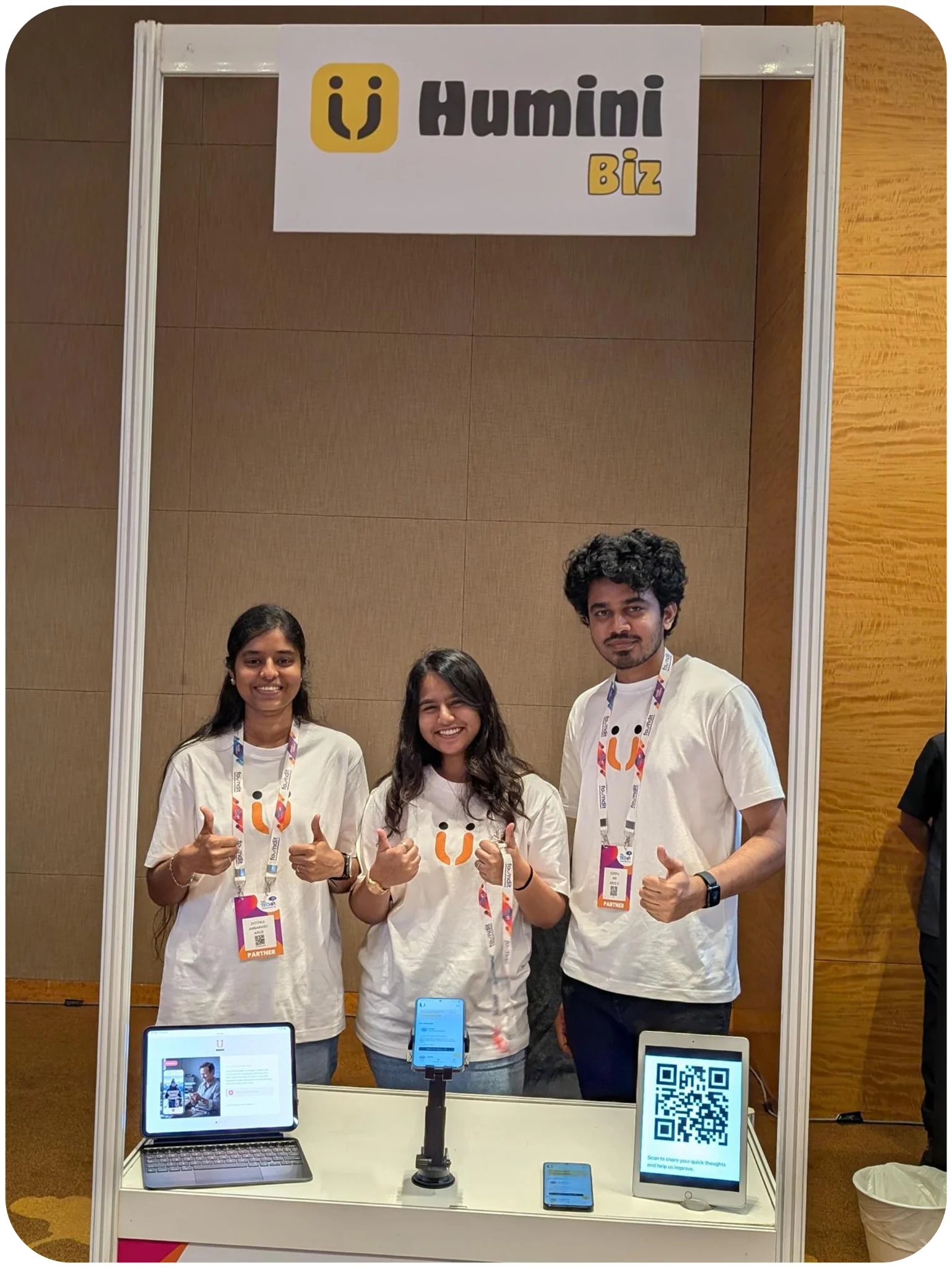
Concept presented at a Singapore business expo; prospective interest and feedback were received.
Company interest
Seven companies shared their contact details and expressed interest in trying Humini Biz.
STAR summary
The project in four parts
situation
Employee engagement largely depended on scheduled activities and formal initiatives that sometimes felt forced and provided limited opportunities for natural everyday connection.
task
Explore how workplace engagement could become more accessible, meaningful and low-effort without interrupting employees' normal work.
action
Conducted qualitative employee interviews, synthesized behavioural insights, created HMW statements, prioritized an MVP, and designed employee and admin experiences from concept through high-fidelity prototype.
result
Created a 0→1 employee engagement concept centered on low-effort interactions and meaningful workplace moments. The concept was presented at a Singapore business expo and generated prospective interest and feedback.
Design impact
Before and after the redesign
Before
Engagement scheduled in advance
Intervention
Moment-based context
After
Connection happens when it is actually relevant
Before
Uncertainty about interrupting
Intervention
Visible availability
After
People approach each other with confidence
Before
Participation feels like a commitment
Intervention
Short interactions with easy exit
After
Taking part carries little social cost
Reflection
What I learned
- Interviews consistently pointed at social risk rather than lack of time, which changed the product from a scheduling problem into a safety and signalling problem.
- Designing the exit path carefully did more for participation than any incentive mechanic would have.
Future scope
What I would validate next
- Usability testing with employees in a live workplace.
- Validate whether repeated participation actually increases over time.
- Admin insights that do not compromise employee privacy.
Next project
Freshcots
From resume-first hiring to candidates who can show capability, and recruiters who can see it.